
Benzer etkinlikler
Tüm etkinlikler →


Benzer yazılar
 Booth note · 24 Nov 2026Why is most dance music around 128 BPM?
 Booth note · 23 Nov 2026Why is house music called “house”? Frankie Knuckles and The Warehouse
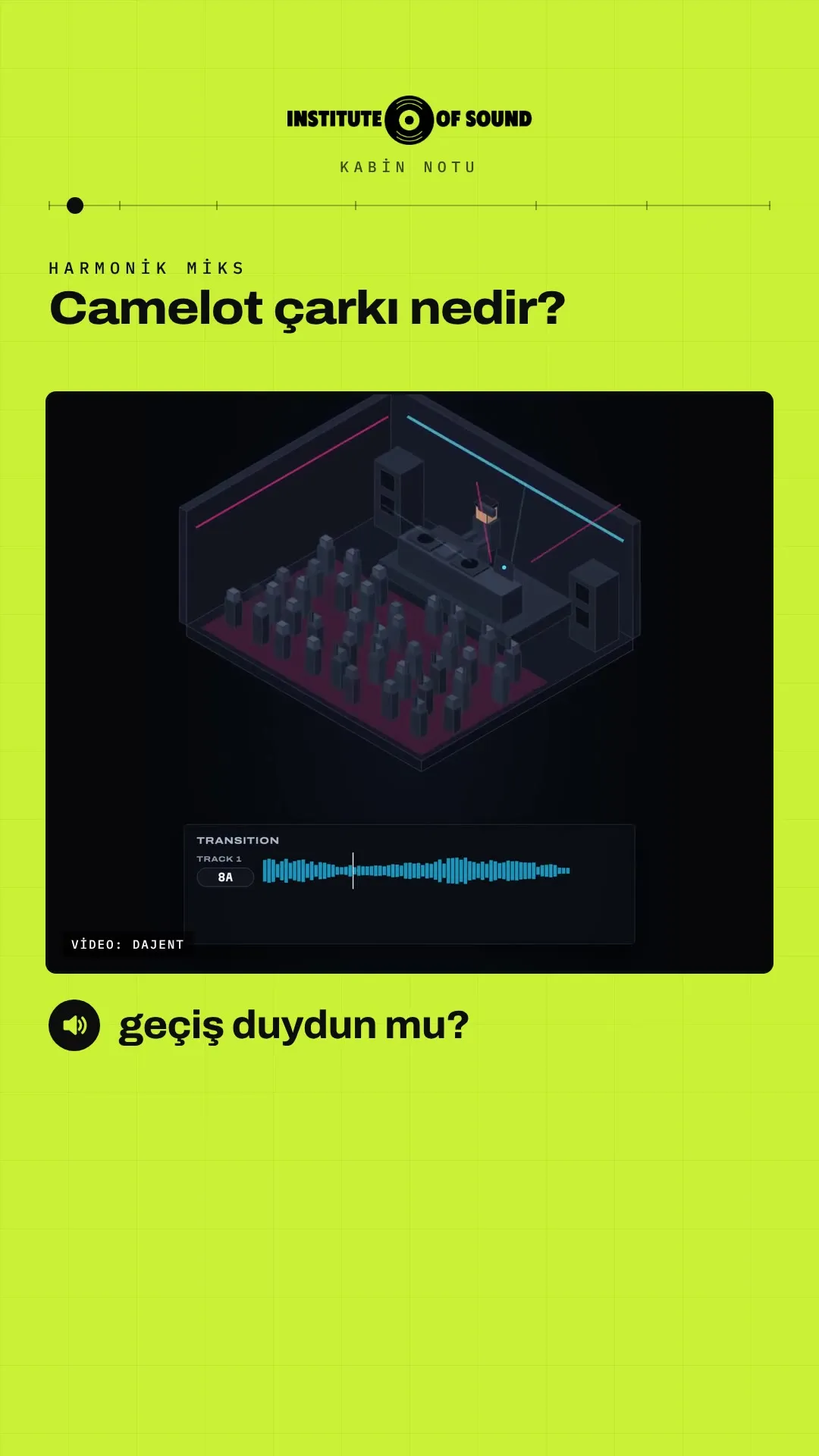 Booth note · 22 Nov 2026Why a transition sounds wrong: the Camelot wheel and harmonic mixing
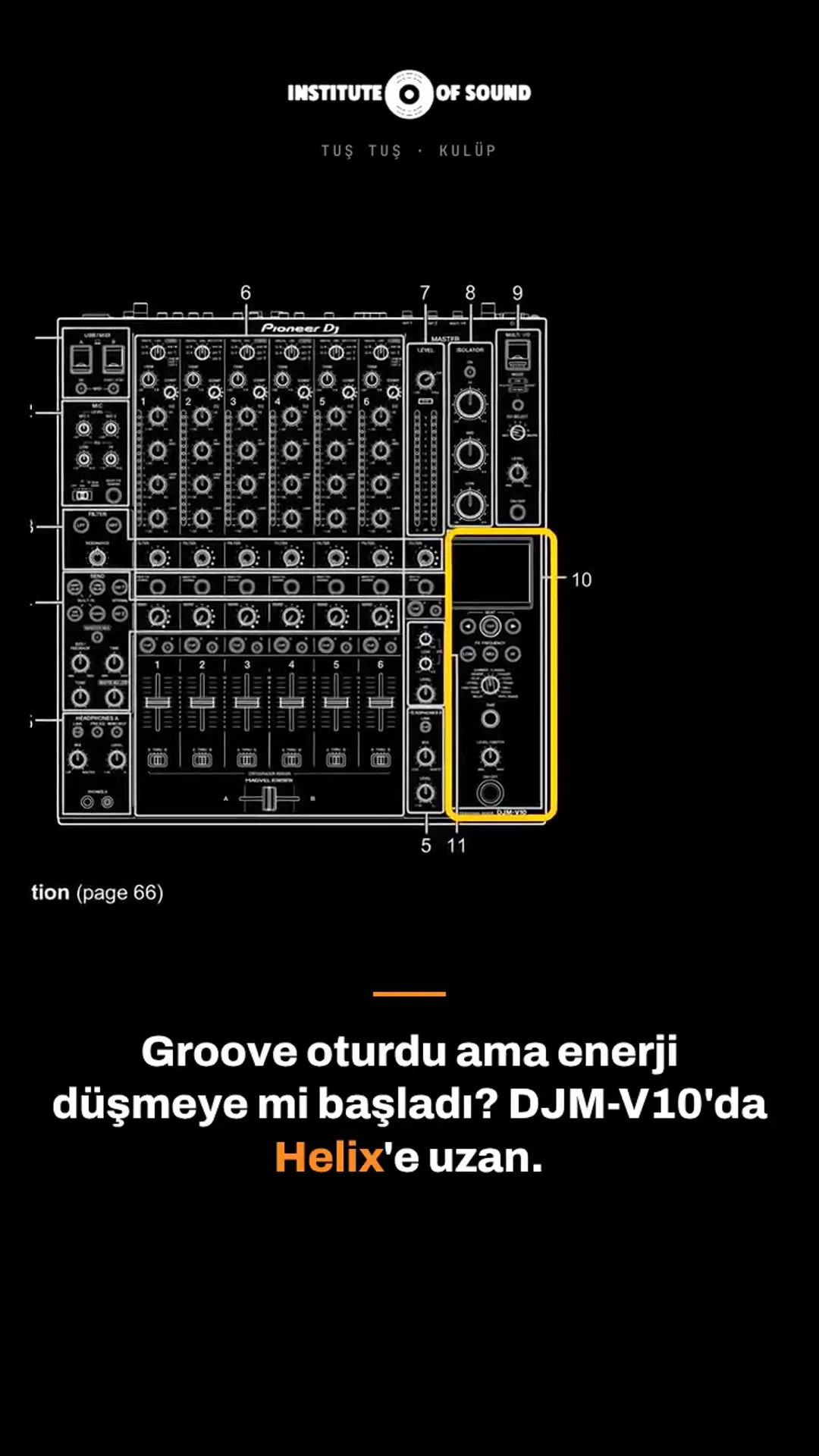 Booth note · 12 Nov 2026Helix on the DJM-V10: when the groove has settled but the energy is dropping
 Booth note · 12 Nov 2026Hot cue or memory cue?
All posts →
50 metres from the stage, but the vocal is right in your ear: line arrays and wavelength
How do the tall speaker columns at festivals carry sound so far? We explain how a line array works, what wavelength is, which frequencies an array can control, and why this changes the bass you hear in the booth.

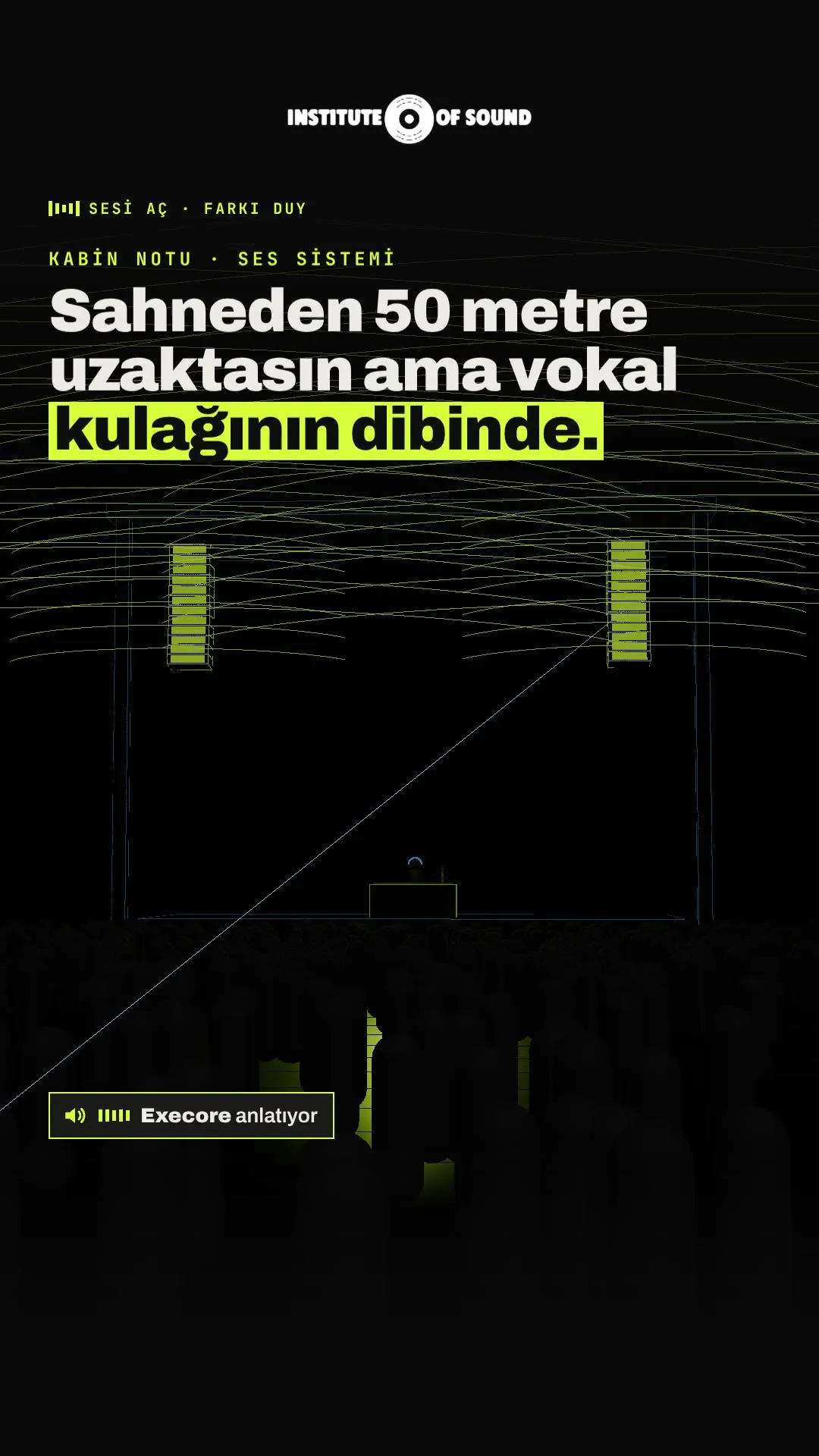
You're at a festival, fifty metres from the stage. You're in the middle of the crowd, the stage looks small, yet the vocal is clear and close, as if it were right in your ear. Meanwhile in some venues the sound is loud but scattered, getting blurrier the further you go. Most of that difference lies in those tall speaker columns hanging on both sides of the stage. In this article we explain line array systems, the idea of wavelength and what it means for you in the booth as a DJ, as covered in our Booth Note video narrated by Execore.
What is a line array?
A line array is a sound system made of many speaker boxes hung on top of each other in a long, tight line. The slightly curved columns you see on both sides of the stage at big festivals, arenas and large clubs are line arrays.
A single speaker spreads sound like a bubble, in every direction. As you move away, the energy spreads over a wide area; roughly every time the distance doubles you lose about 6 decibels. The sound also hits the ceiling, floor and walls, the reflections mix with the direct sound and clarity is lost.
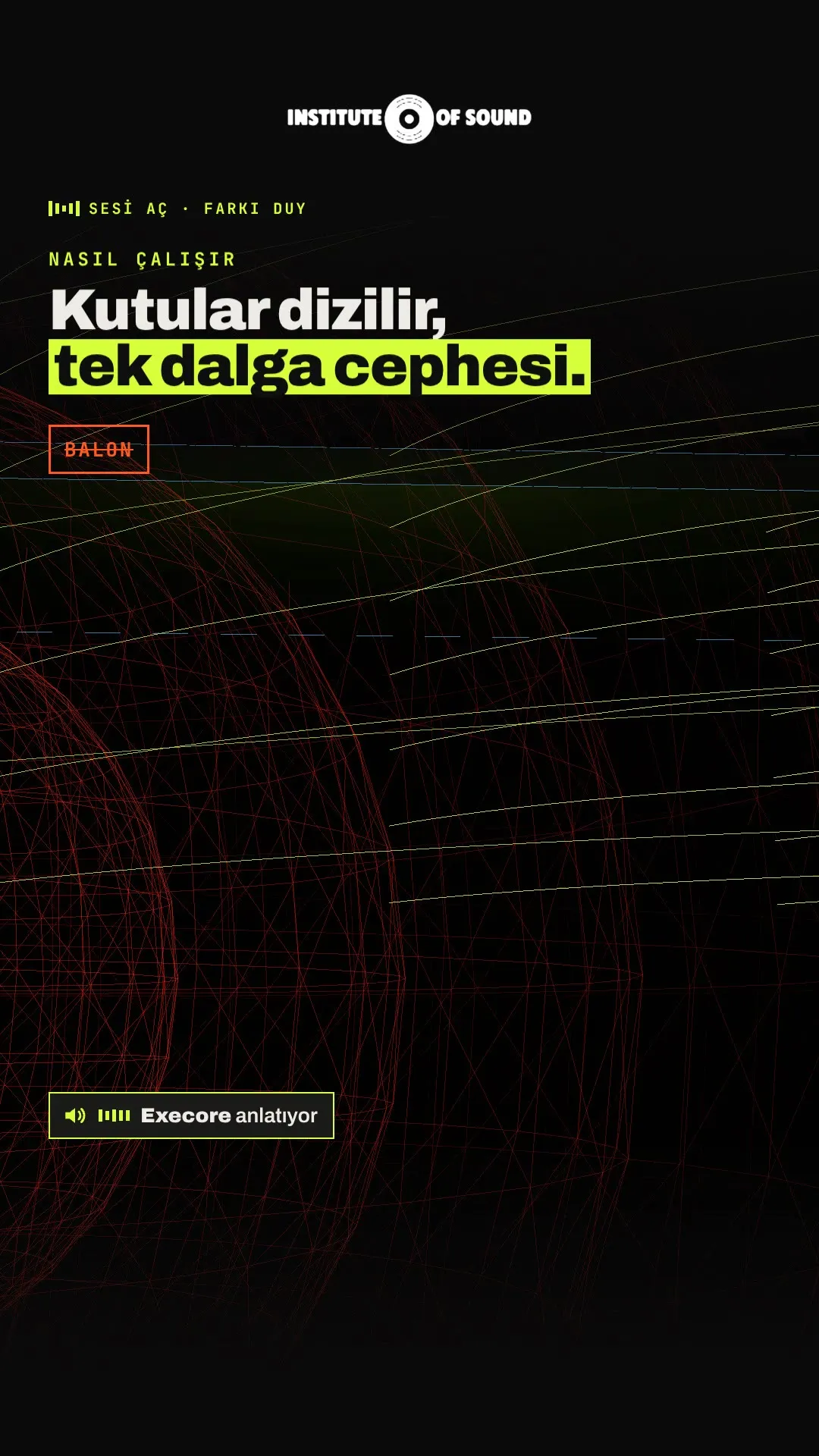
In a line array the boxes work together and form a single wavefront. Sound spreads like a cylinder rather than a bubble: wide horizontally, narrow vertically. As a result:
- sound travels further with less loss (in the near field the loss drops to about 3 dB per doubling of distance),
- energy isn't wasted on the ceiling and floor, so reflections are reduced,
- the difference between the front and the back of the crowd gets smaller.
The bottom boxes are angled slightly inward (the famous "banana" curve) to share the sound across different parts of the crowd. We cover that separately in our Booth Note "Why are festival speakers curved like a banana?".
But there's a condition: wavelength
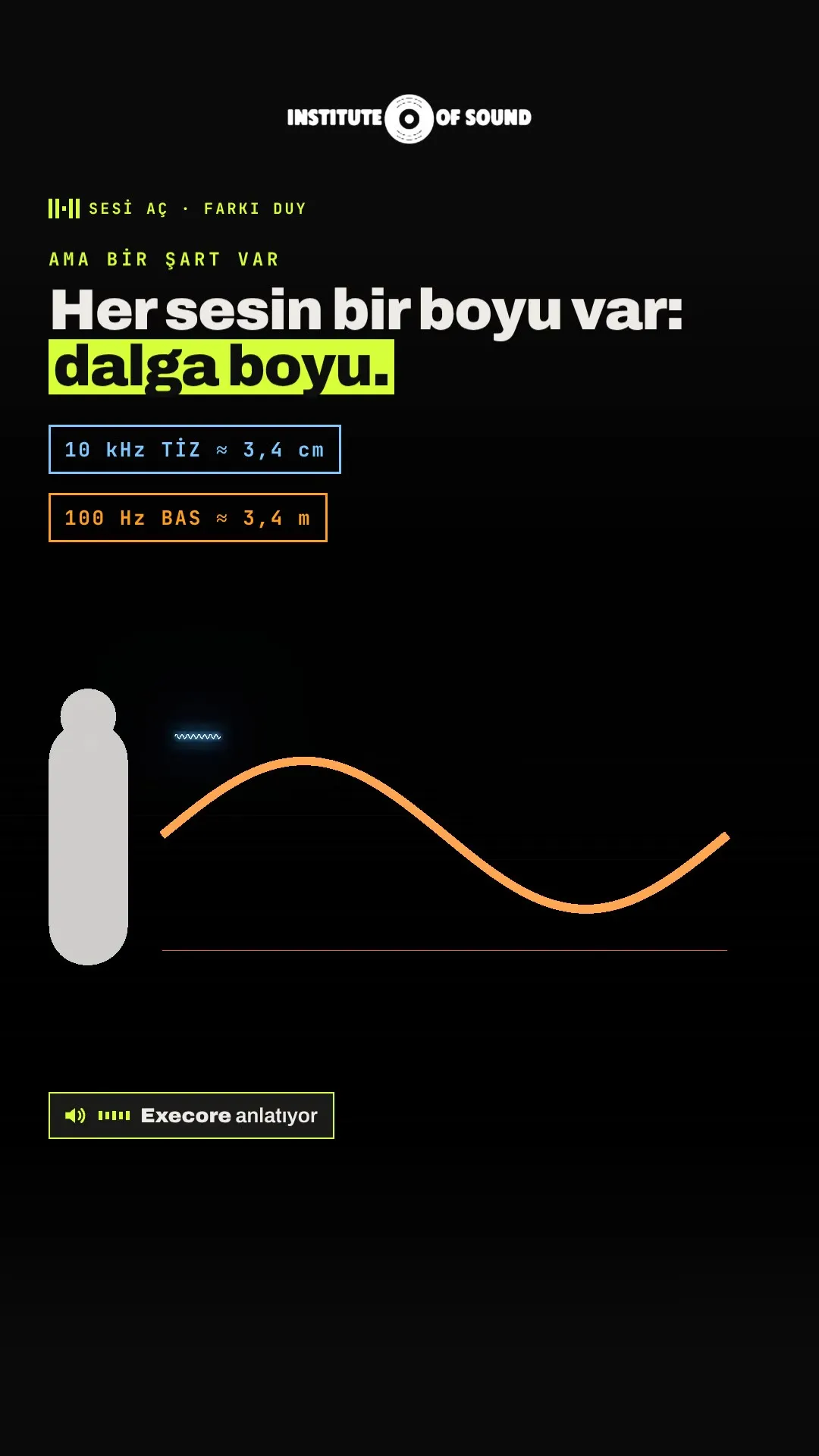
Every sound has a physical size: its wavelength. Sound travels through air at about 343 metres per second. Wavelength is that speed divided by the frequency:
- 10 kHz (hi-hats, cymbal shine): 343 / 10,000 ≈ 3.4 centimetres
- 1 kHz (body of the vocal): ≈ 34 centimetres
- 340 Hz: ≈ 1 metre
- 100 Hz (bass, body of the kick): ≈ 3.4 metres
- 50 Hz (sub bass): ≈ 6.9 metres
So a hi-hat is a few centimetres long while a bass note is twice the height of a person. This difference directly determines how speakers can steer sound.
An array only controls waves about as long as itself
For a line array to steer sound, it has to be about as long as, or longer than, the wavelength it wants to control. A rough rule:
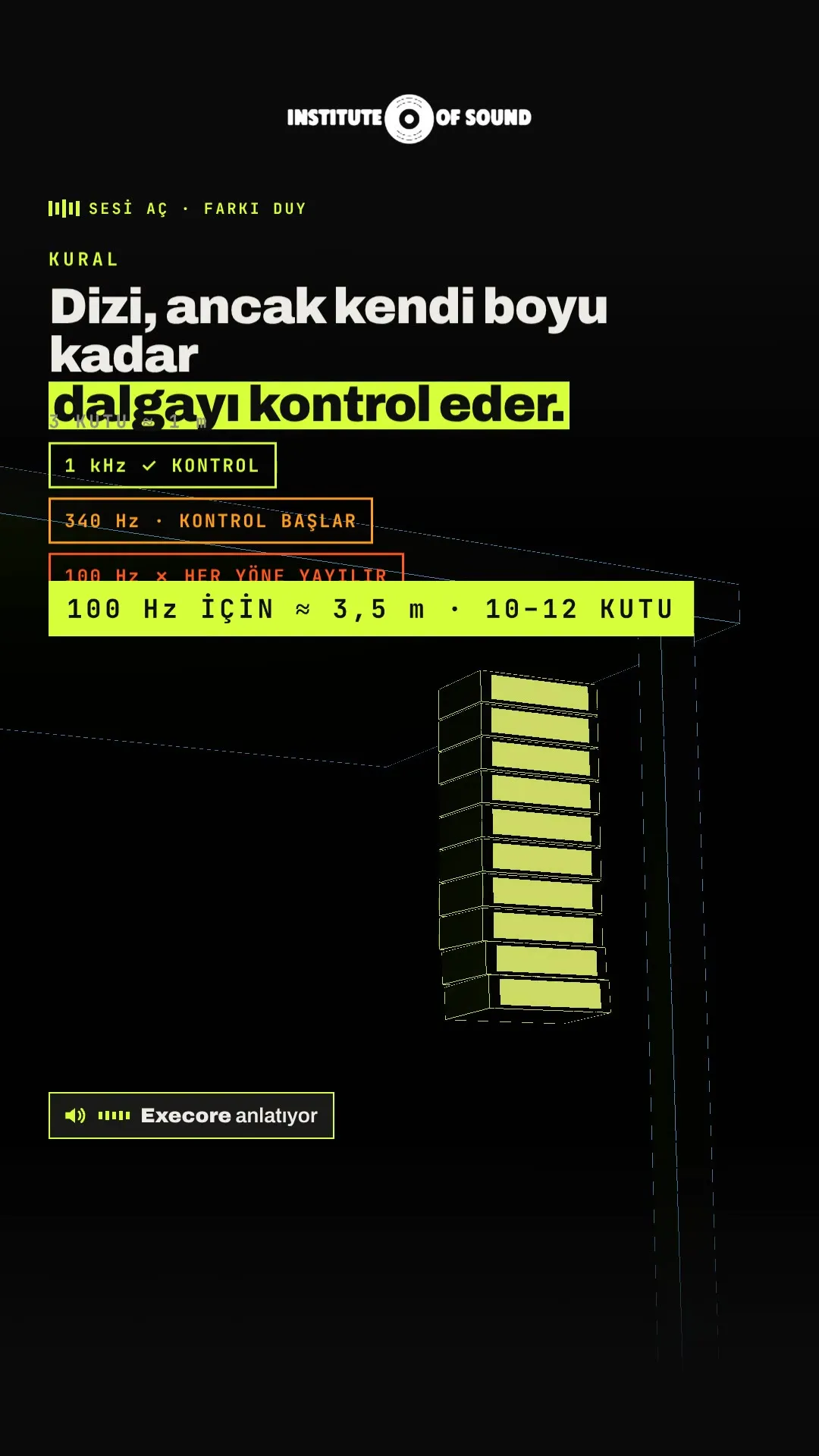
- A 1-metre array (say 3 boxes) starts controlling at around 340 Hz. The vocal and the upper frequencies are steered nicely.
- The bass below that spreads in every direction like an ordinary speaker. For the bass, the array isn't a "line array" but a big point source.
- To control the bass down to 100 Hz you need about 3.5 metres of array, which, depending on the box, often means 10 to 12 boxes.
That's why sound engineers model the venue and calculate the length of the array, the number of boxes and their angles. A short array may look like a line array from a distance but won't give the expected control in the low end. Subwoofer arrays, cardioid arrays or ground-stacked sub lines are used separately for the bass.
The vocal comes straight at you, the bass fills everything
The practical result: at a festival the vocal and melody reach you like a narrow, focused beam; you hear them clearly even fifty metres away. The bass spreads over a much wider area. It fills the back of the stage, the sides and the DJ booth too.
So what does this mean in the booth?
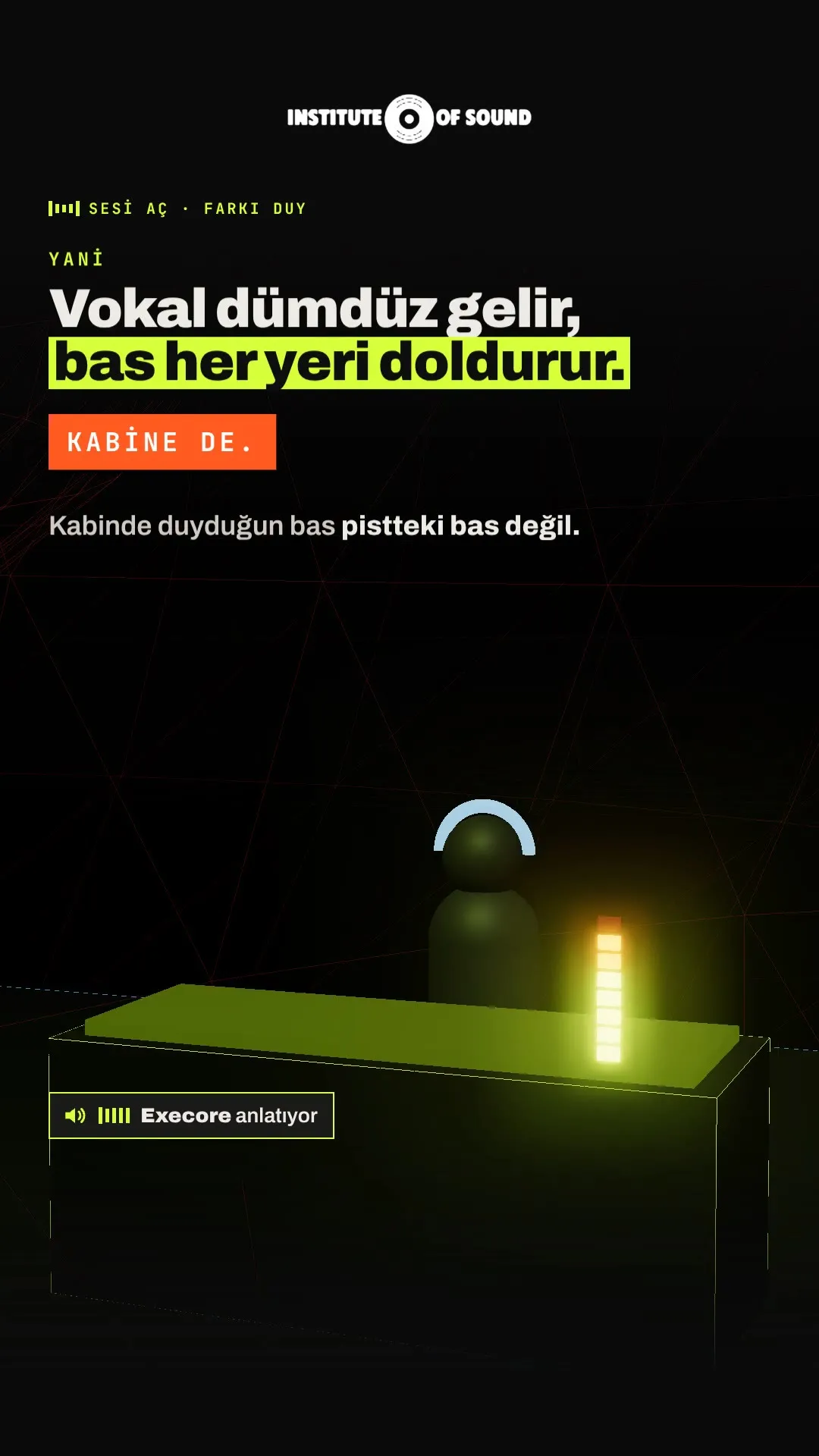
The bass you hear in the booth is not the bass on the floor. The booth usually sits behind or beside the system: the highs don't come straight at you (the array steers them to the crowd), but the bass fills the booth from every direction. As a result the booth sounds bassier and muddier than it really is. That illusion leads to the two most common mistakes new DJs make:
- Cutting the bass: the booth feels too bassy, so you turn down the LOW; on the floor the music suddenly gets thin.
- Pushing the level: when the booth monitor isn't enough you drive the trims and master into the red; the system distorts or the limiter kicks in.
The right approach:
- Set the bass by the meter and the headphones, not by your ears in the room. The channel meters and master level show you the real signal; headphones are a reference independent of the booth acoustics.
- Set the booth monitor properly. The monitor isn't a copy of the floor sound, it's your working tool.
- If it's not loud enough, tell the resident DJ. The venue's resident DJ hears the system every night and knows best where the level is set, how the booth monitor works and what the system's limits are.
- Listen to the floor before your set. If you get the chance, go to the middle of the floor during soundcheck or while the previous DJ is playing and listen for a few minutes. Comparing what you hear in the booth with what happens on the floor changes every decision you make that night.
At Institute of Sound
You learn to play on club and festival systems, set the booth monitor, build gain structure and read the floor in one-to-one lessons, on Pioneer DJ equipment and club-level monitors. Learn to play a club system with your own ears in the booth.
Contact us for details.
Narration: Execore · Video: Institute of Sound 3D Booth Note